Preface
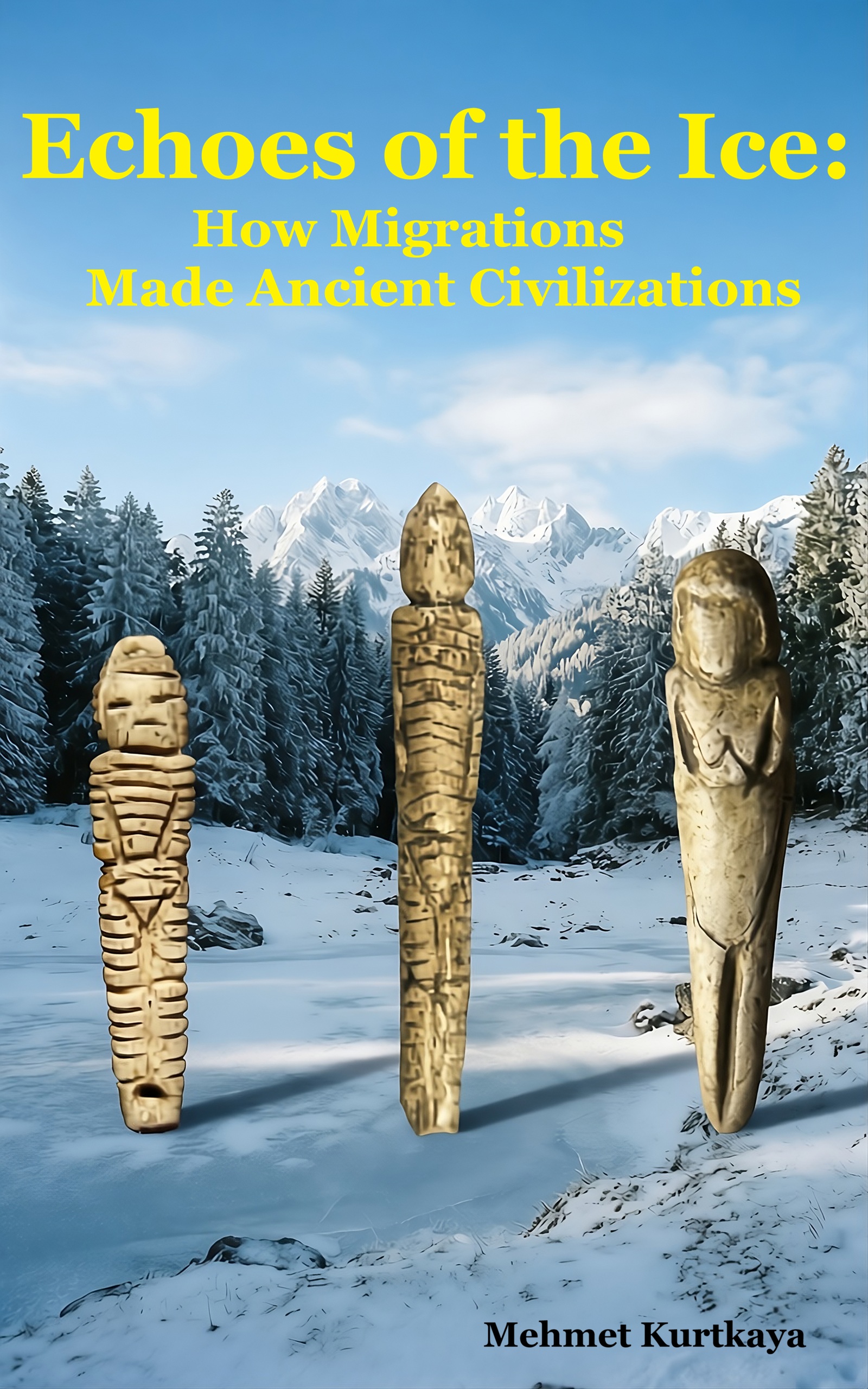
For generations, the story of our past was written in stone and pottery, told through myths and monuments. The textbook narrative was clear: great civilizations rose organically from their native soil. Ideas traveled, but people largely stayed put.
That story is over.
Everything changed when we learned to read the letters of life hidden inside ancient bones. In the last twenty years, the revolutionary science of archaeogenetics has turned history upside down. By extracting DNA from skeletons thousands of years old, scientists have unlocked a biological archive that rewrites everything we thought we knew.
The old consensus has crumbled. We now understand that humanity’s story isn’t one of isolated genius, but of constant movement, contact, and mixing. Cultures weren’t born in a vacuum; they were forged by the meeting and merging of peoples on a staggering scale. The groundbreaking work from researchers at Harvard, the Max Planck Institute, and universities worldwide doesn’t just add footnotes—it redraws the map of our past.
This genetic evidence has done something else, too: it has vindicated the historians and researchers who, for decades, argued for the power of migration. Once sidelined for challenging the status quo, their vision of a dynamic, mobile past has been spectacularly confirmed.
Let’s look at what this new evidence reveals. Consider a few fundamental stories, now transformed:
How Farming Came to Europe
The Old Story: Local European hunter-gatherers slowly adopted farming techniques from neighboring cultures.
The Genetic Truth: A large-scale migration of Anatolian farmers from modern-day Turkey swept into Europe. They didn't just bring ideas; they became the continent’s first farming population, mixing with and largely replacing the hunter-gatherers who were there before.
The Spread of Indo-European Languages
The Old Puzzle: How did languages from English to Hindi, spanning continents, become so widespread?
The Genetic Truth: Starting around 5,000 years ago, massive waves of horse-riding Yamnaya herders exploded from the Eurasian steppe. Their westward push into Europe and eastward thrust into Asia carried their genes and their language, laying the foundation for a linguistic family that dominates the globe today.
The Origin of Uralic Languages
The Old Theory: Hungarian, Finnish, and other Uralic languages originated near the Ural Mountains, hence their name.
The Genetic Truth: Archaeogenetics proves they trace to Siberia's Lake Baikal region—thousands of kilometers east—carried westward by ancient steppe migrations.
The Roots of Ancient Egypt
The Old Assumption: One of the world's first great civilizations sprang from purely local, African origins.
The Genetic Truth: A landmark 2025 study of a high-status Egyptian man from roughly 2700 BC found that 20% of his DNA came from Mesopotamia.
Archaeogenetics has an even more astonishing power: it can discover entirely lost chapters of the human family. The most stunning example is the Ancient North Eurasians (ANE).
Unknown to science until 2014, this so-called "ghost population" thrived in Siberia from 30,000 to 15,000 years ago. They left no monuments we can name, but their genetic legacy is immense. Today, their DNA is found in billions of people, from Europeans and Native Americans to populations across Central and South Asia. They are a hidden pillar of humanity, a population we would never have known existed without the silent testimony of their DNA.
This book serves two purposes. First, it is your up-to-date reference to the groundbreaking scientific papers that have rewritten our past, as of 2026. I’ve distilled the most consequential archaeogenetic studies—including the latest revelations from labs across the globe—into a clear, compelling narrative.
Second, it is a springboard for your deeper exploration. I chart the epic journey from our African origins over 300,000 years ago to the foundations of the classical world. Each chapter focuses on a pivotal civilization, people, or culture—from Ice Age Sungir hunters and Göbekli Tepe builders to Sumerians, Indo-Europeans, Rome, China, and their ancient influences. Whenever available, I spotlight the genetic discoveries that have fundamentally reshaped our understanding of who they were and where they came from.
I’ve woven together the hard evidence of genetics with insights from archaeology, linguistics, and mythology to build this fresh narrative. While the research is now well-established in leading journals, it has been slow to filter into the stories we tell ourselves. Our knowledge has exploded in a single decade, and it is time for the story to catch up.
Whether you are new to human history or a seasoned enthusiast, this volume is your guide to the epic, winding, and wonderfully mixed-up journey of us all. This is a clear, up-to-date synthesis of the major archaeogenetic revolutions as a starting point for deeper exploration — one that will be updated as new papers emerge. The old story of isolated development is over. Welcome to the true history of humanity: a story of movement, meeting, and admixture. Our past is far more interesting—and far more united—than we ever imagined.
I have also added two chapters at the end. In one, I ask the question: What Made Civilizations—including Our Modern World?
While the complete answer is beyond the scope of the book, readers can find clues in the formation of ancient civilizations detailed throughout. I highlight only some of the key factors.
The final chapter, an appendix, serves as both a guide and a warning about the use of AI. In writing this book, I have used AI heavily to accelerate research, synthesis, and drafting—while always grounding the work in primary sources and my own expertise. Someone without deep knowledge of a domain may not receive complete answers from AI models, so keeping up with current research remains essential.